
Eye Exam at Havre Optometric Clinic in Havre MT
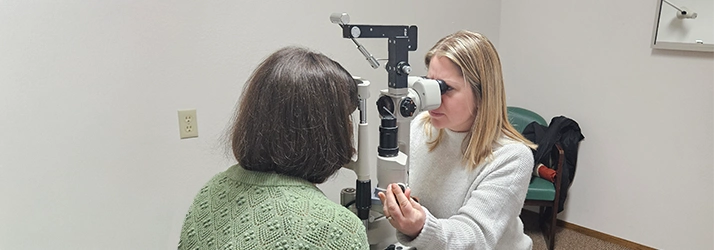
Healthy vision begins with regular eye exams that monitor how your eyes change over time. Even small shifts can affect how you see and feel each day. At Havre Optometric Clinic, we conduct thorough assessments to evaluate clarity, focus, and overall eye health.
What Happens During a Complete Eye Exam?
A complete eye exam allows your doctor to evaluate both the health of your eyes and the quality of your vision. The outside and inside of your eyes are carefully examined for signs of conditions such as glaucoma or cataracts, which often develop slowly and require early detection.
You may undergo several tests, including:
- Visual field test – measures side vision and checks for blind spots.
- Refraction test – determines the correct prescription for glasses or contact lenses.
- Binocular vision test – assesses how well your eyes work together.
Additional testing may be recommended if something requires closer inspection. In some cases, dilation may be needed to enlarge your pupils so the doctor can view the back of your eye. Because dilation can cause temporary light sensitivity, arranging transportation home may be helpful.
At the end of your visit, Havre Optometric Clinic will explain your results and outline the next steps clearly.
Why Early Detection is Vital
Eye problems often develop gradually, and many people don't notice changes right away. Regular exams are one of the best ways to protect your vision. Early detection allows your doctor to begin treatment before damage occurs.
Benefits of early detection include:
- Preventing vision loss by catching problems early.
- Managing long-term conditions such as glaucoma or dry eye.
- Revealing hidden health issues like diabetes or high blood pressure.
- Keeping your prescription current so you see clearly every day.
Routine exams benefit all ages:
- Children may struggle in school if vision issues go unnoticed.
- Adults often experience eye strain from screens or driving.
- Older adults face higher risks of age-related eye diseases that require monitoring.
Advanced Technology for Better Eye Health
Modern eye exams use advanced tools that provide detailed insights into your eyes. Each device plays a role in measuring key metrics and highlighting areas that may need attention.
Key technologies used in eye examinations include:
- Optomap Retinal Scanner: Captures a wide image of the retina without the need for eye drops.
- Digital Autorefractor: Measures how your eyes focus light.
- Non-Contact Tonometer: Measures intraocular pressure.
- Slit Lamp Microscope: Provides detailed views of the front structures of the eye.
- Visual Field Analyzer: Tests your peripheral vision.
- Retinal Camera: Captures close-up images of various eye structures.
Tracking Your Vision Prescription
Your vision can change gradually, so it's essential to check your prescription. During refraction, the doctor switches lenses and asks which appears clearer to determine the exact strength you need.
Digital tools also measure how light enters your eyes, confirming accuracy. Results are compared with past prescriptions to track changes over time.
Signs you may need a new prescription include:
- Difficulty reading small print.
- Squinting at distant objects.
- Headaches after screen use.
- Blurry or double vision.
- Eye strain during everyday tasks.
When an Emergency Eye Exam Is Needed
Not all eye exams are routine. A problem-focused or emergency exam addresses sudden changes or discomfort.
Doctors can treat urgent issues such as pain, redness, swelling, light sensitivity, or foreign objects in the eye. They also manage infections, scratches, and allergic reactions.
In-office procedures may include:
- Removing small foreign objects.
- Treating blocked tear ducts.
- Starting medications for infections or irritation.
Eye Dilation vs Optomap Scan: What's Right for You
To examine the back of your eye, doctors may use either dilation or an Optomap scan:
- Dilation – eye drops enlarge pupils, allowing a detailed view but causing temporary light sensitivity and blurred vision.
- Optomap scan – captures a wide retinal image quickly and comfortably, without drops, so you can resume normal activities immediately.
Both methods help detect early signs of eye disease, and your doctor will recommend the best option for you.
Book Your Eye Exam Today!
Need a thorough eye checkup? Reach out to Havre Optometric Clinic at (406) 265-1231 or stop by to schedule your appointment.

OFFICE HOURS
Monday
8:00am - 5:00pm
Tuesday
8:00am - 5:00pm
Wednesday
9:00am - 5:00pm
Thursday
8:00am - 5:00pm
Friday
8:00am - 5:00pm
Saturday & Sunday
Closed

Havre Optometric Clinic
416 3rd Ave
Havre, MT 59501